
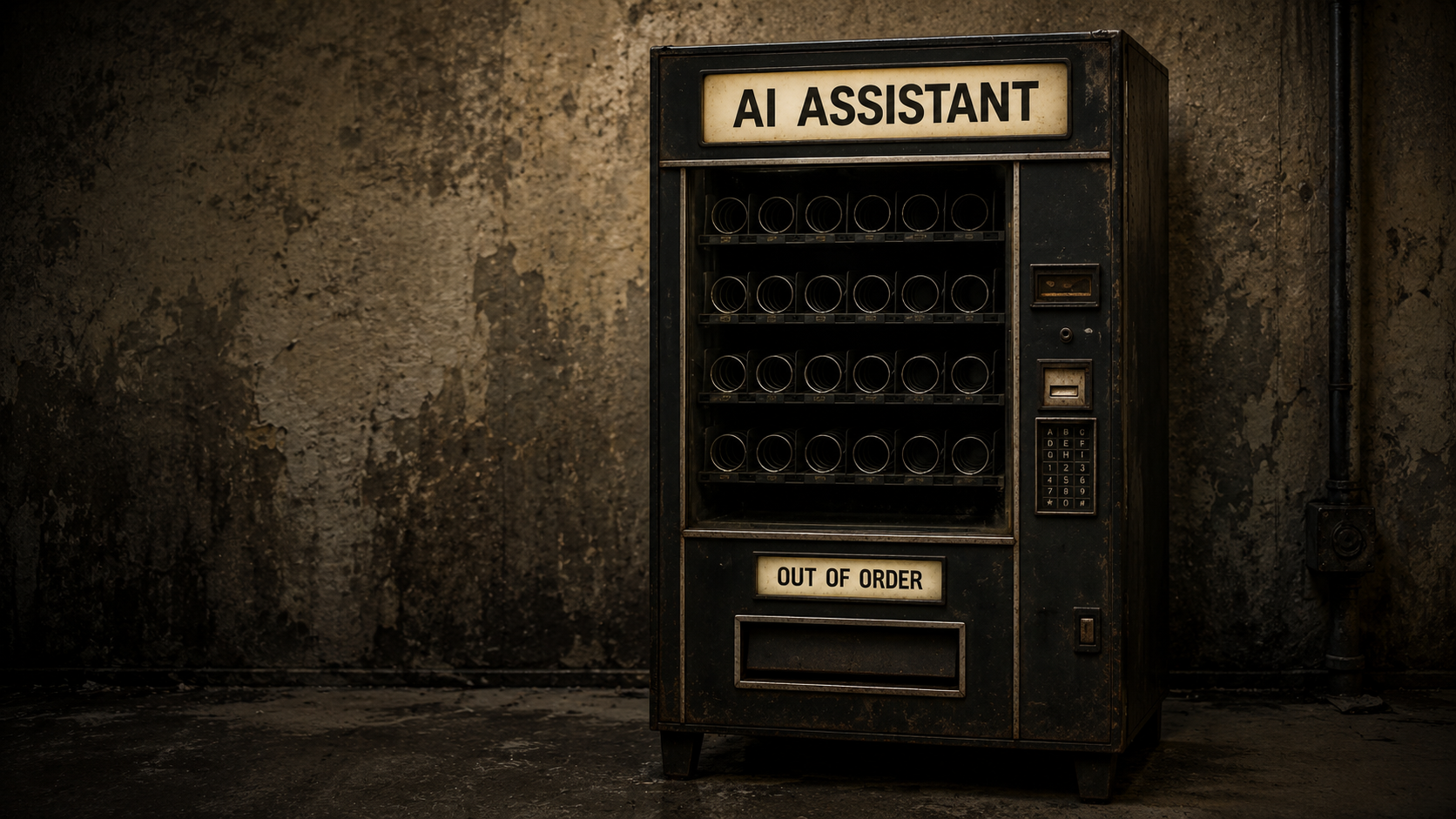
We’re in the middle of an AI arms race. Every company wants to prove it belongs in the conversation. No one wants to look late.
But in the scramble to appear innovative, most companies are deploying AI like toddlers playing dress-up: messy, misaligned, and disconnected from reality.
Look at what’s actually happening.
Social platforms are shoving “AI” features into their apps like seasoning. One company, no names needed, pinned an AI chatbot to the top of everyone’s inbox. Want to remove it? Pay for a subscription. Want to use it? It’s barely more useful than a discount ChatGPT clone.
It doesn’t meaningfully adapt. It doesn’t improve the platform. It doesn’t solve a real problem.
But the company gets to say it has AI.
Mission accomplished.
Then there are the shopping apps and customer service platforms replacing human interaction with “AI assistants” that do little more than recycle canned responses.
You ask a question. You get filler.
You try to solve a problem. You get trapped inside a flowchart dressed up as intelligence.
This is not AI transformation.
It is automation duct-taped to a search bar.
What we’re seeing is not innovation. It is desperation.
The problem is not AI itself. The problem is that companies are deploying it without strategy, context, or a real understanding of the technology.
They toss AI into products like a buzzword grenade, hoping the blast attracts headlines, investors, or user growth.
Instead, it erodes trust and delivers almost no value.
Meanwhile, the real opportunities are sitting untouched.
AI that could improve personalization.
AI that could automate meaningful workflows.
AI that could surface insights users would never find on their own.
Those applications are either ignored or implemented half-baked because they require actual product thinking.
It is easier to build a chatbot and issue a press release than to rethink a core product around AI from the ground up.
That is the part most companies want to skip.
They want the appearance of transformation without doing the work of transformation.
The window for that is closing.
Users are not stupid. They know the difference between something genuinely useful and a flashy shortcut designed to justify a higher subscription tier.
And here is the irony.
In trying so hard not to get left behind, companies are all sprinting in the same clueless direction.
It is a stampede toward irrelevance.
Everyone wants to claim they are leading the AI wave, but much of what they are building is shallow, performative, and sometimes barely AI at all.
This is not leadership.
It is cargo cult behavior.
The companies that win will not be the ones shouting “AI” the loudest.
They will be the ones that shut up, study the technology, understand the user, and build something that actually works.
Because right now, in the rush to get ahead, most companies are perfectly content holding hands and drowning together.